Research Context
My doctoral and postdoctoral research (2014–2022) focused on the large-scale structure of the universe, using cosmological simulations and observational data to study dark matter halo dynamics. This work sits at the intersection of high-performance computing (HPC), big data (petabyte-scale simulations), and advanced statistical modeling.
Technical Methods & Tools
- Programming: Python (7+ years), including NumPy, SciPy, and custom analysis pipelines
- Statistical methods: MCMC sampling, Gaussian Process Regression, Bayesian parameter estimation with full covariance matrices, signal-to-noise optimization
- Machine learning: Model selection, density estimation, parameterized profile fitting (NFW vs. DK models), feature engineering from high-dimensional phase-space data
- Data visualization: Matplotlib and Seaborn for publication-quality figures, custom multi-panel layouts, contour mapping, and phase-space density visualizations
- Technical writing: LaTeX for all publications, structured scientific writing for international peer review
- Data scale: 8+ billion particles from N-body cosmological simulations, cross-matched with multi-survey observational catalogs
- Computing: HPC cluster environments for simulation processing and ray-tracing pipelines
Cross-Domain Skills
This research required end-to-end problem solving: designing data pipelines from raw simulation output to analysis-ready catalogs, statistical inference at scale, model selection and validation, and petabyte-scale data processing on HPC systems. It also required translating complex mathematical concepts into structured narratives, creating effective data visualizations, and communicating methodology clearly for international peer review—skills that transfer directly to industry roles in data science, AI-powered tool development, and technical communication.
Research Papers
Natural Boundary of Dark Matter Haloes
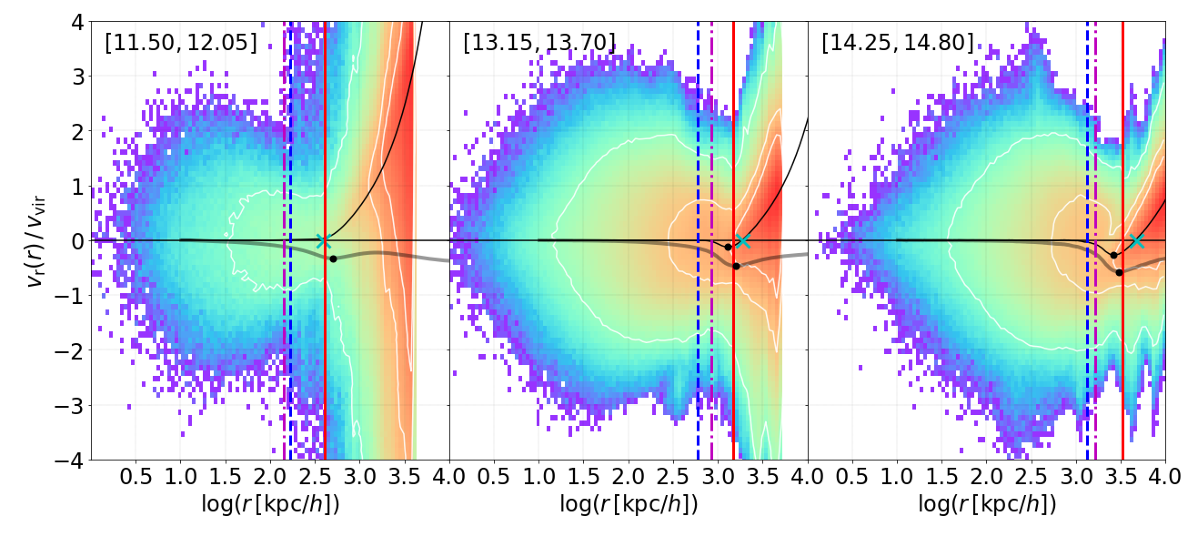
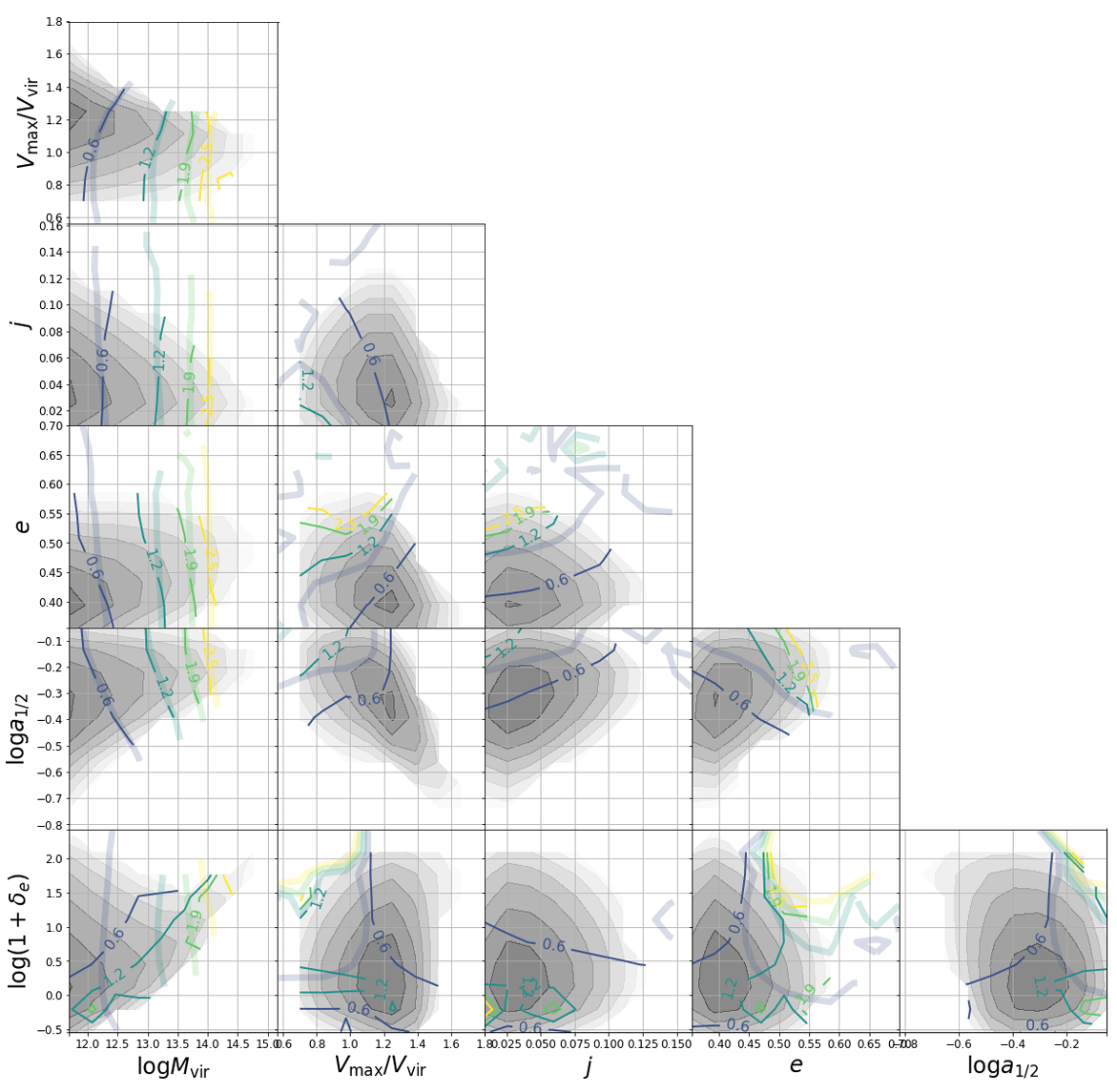
Discovery of a bias trough marking the boundary where haloes deplete their environment, using large-scale N-body simulations. (2020)
View paper details →Depletion Radius Measurement
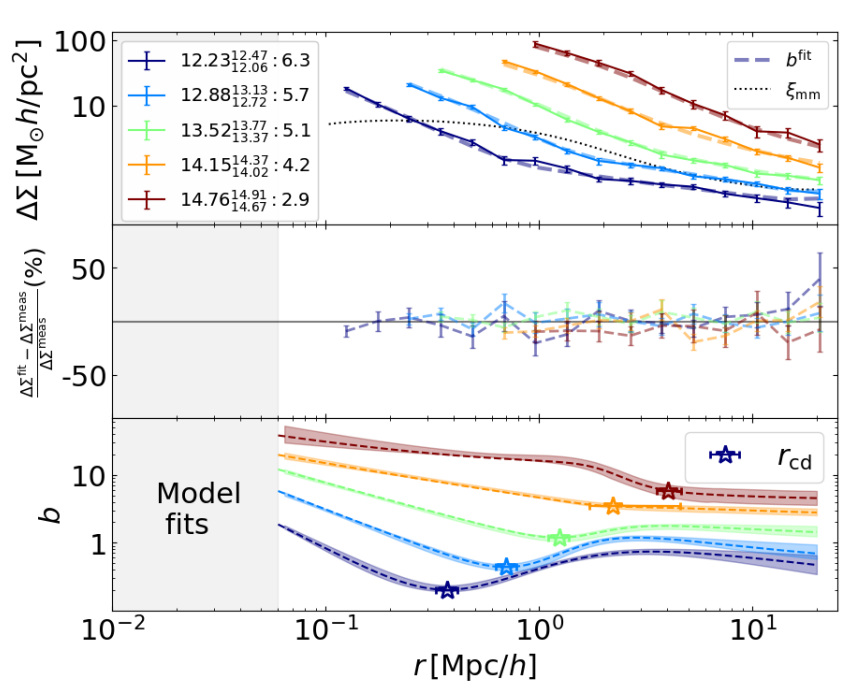
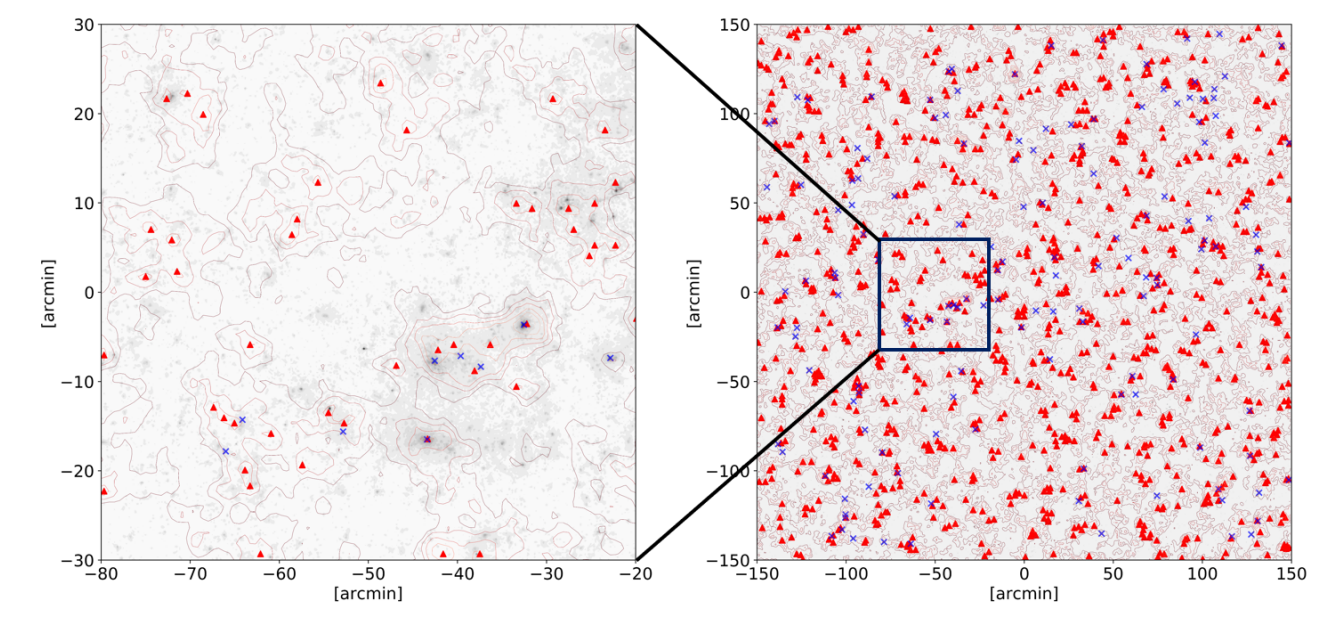
First-ever empirical measurement of the depletion radius using real-world weak lensing data from DESI Legacy Surveys. (2022)
View paper details →Impact of Baryonic Physics
Sensitivity analysis of how non-dark-matter factors affect cosmological signals, using the BAHAMAS simulation suite. (2019)
View paper details →Prospects for Mass Distributions
Feasibility study for next-generation telescopes (LSST/Rubin Observatory), assessing new density profile models. (2018)
View paper details →